Acquiring
Prints & editions
Every work is offered in two editions and six sizes. Prices below are for a square work. Price follows the printed area, so a work with other proportions starts a little lower; its own page shows its exact figures.
Sizes and prices
| Longest side | Open edition | Numbered edition |
|---|---|---|
| 12″ | $90 | $160 |
| 16″ | $117 | $212 |
| 20″ | $145 | $264 |
| 24″ | $174 | $316 |
| 28″ | $202 | $368 |
| 32″ | $231 | $420 |
Prices in USD. Free shipping in Canada and the United States; $20 flat internationally.
Three sizes on one wall, to scale
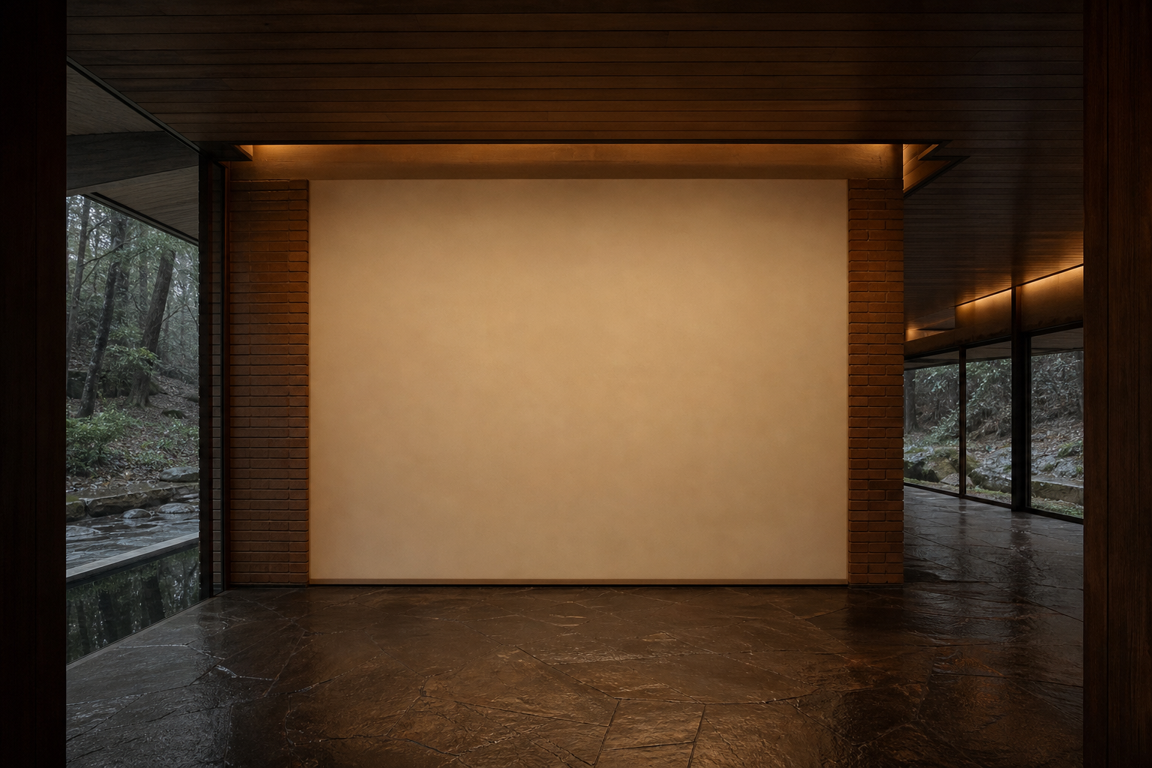

- 12″ · 11 × 12 in
- 20″ · 18 × 20 in
- 32″ · 28 × 32 in
Strange Kelp #1 in the Ravine House. Any work can be hung at any size in the rooms.
Questions
What is a giclée print?
A giclée is an archival pigment inkjet print. Pigment inks are laid onto heavy cotton or matte paper at very high resolution. Unlike a poster, which is mass-printed with dye inks on thin coated stock, a giclée is made one at a time and is rated to resist fading for decades under normal indoor light.
Open edition or numbered edition?
The image is identical. The difference is paper, scarcity and provenance.
An open edition is printed on archival matte 230gsm, unnumbered, and produced as ordered. It is the least expensive way to live with the work.
A numbered edition is printed on Hahnemühle Photo Rag 308gsm cotton, hand-numbered to the edition size, and ships with a certificate of authenticity carrying its own verification code. Once the edition closes, it is not reprinted.
How do I choose a size?
Measure the wall, not the picture. A work reads well when it occupies roughly two-thirds to three-quarters of the wall span it sits on, or of the furniture beneath it. For most rooms that means 20 to 24 inches for a single work above a console or bed, and 12 to 16 inches when several works hang together.
Sizes are quoted on the longest side. The other dimension follows the work's own proportions and is shown on each work's page.
Do prints come framed?
No. Prints ship flat and unframed, with a white border for handling and framing. This keeps shipping costs and breakage down, and lets you match the frame to the room.
What is the certificate of authenticity?
Each numbered edition ships with a signed certificate recording the work, its edition number and the date. It carries a code that can be checked against the studio's register at any time, so provenance stays verifiable if the work changes hands.